
Microplastic Removal From Wastewater Using Membrane Filtration
Introduction
Microplastics are small plastic particles less than 5 mm in diameter, including polyethylene (PE), polypropylene (PP), and polystyrene (PS), that come from various sources. They enter the wastewater through everyday human activities, such as unintentional loss from spills during manufacturing or transport, abrasion during laundering clothes that are made up of artificial fibers, or degradation of larger plastic particles.
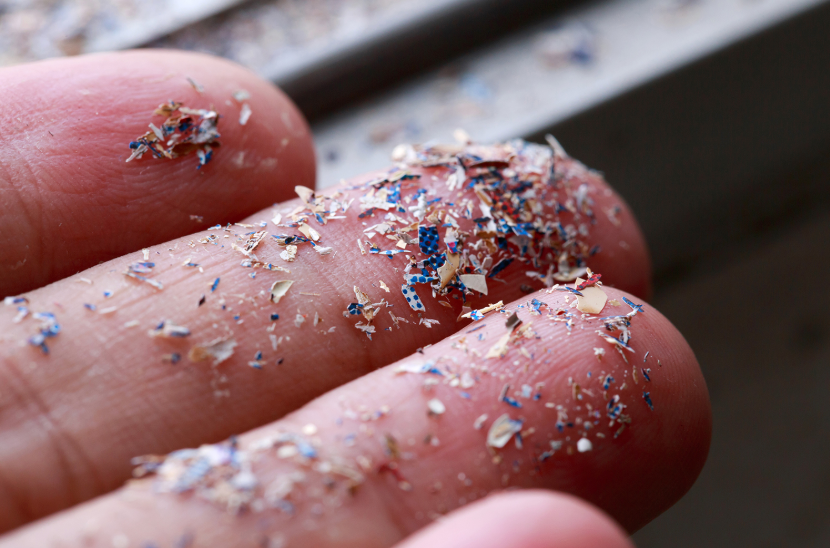
Image Credit: Stanford Report

Image Credit: ScienceDirect
Due to the lack of current standard protocol and removal technologies, MPs are often not filtered during wastewater treatment. Wastewater treatment plants, known as WWTPs, collect wastewater from households, industries, and rainwater runoff. Although they remove a significant portion of contaminants, MPs are still not fully eliminated. During the primary treatment, where relatively large particles are filtered out, about 78–98% of MPs are removed; during the secondary treatment, where relatively small, organic particles are consumed by microorganisms, only 7–20% of MPs are removed.

Image Credit: Wormfarm
These processes, although they remove the majority of the MPs, still allow some of them to pass through the treatment systems and eventually enter natural water bodies such as rivers, lakes, and oceans. The issue remains a serious concern: since MPs are not biodegradable, they are ingested by aquatic organisms and accumulate through the food chain, releasing toxic chemicals that negatively affect health. To date, microplastics have been found in more than 1,300 species, including within the human body.
One promising alternative that recently gained attention in terms of MP removal from wastewater is membrane filtration. Membrane filtration includes microfiltration, ultrafiltration, nanofiltration, and reverse osmosis membranes, all of which rely on selectively permeable membranes to separate oligomers of different molecular sizes. The membrane has pores and proteins called aquaporins that allow small, nonpolar molecules and water to pass through. This means that as the membrane pore size decreases, selectivity and removal efficiency increase.
This research article summarizes how different membrane filtration methods remove microplastics from wastewater, compares their removal efficiencies, and addresses the key challenges that remain.
Literature review
As mentioned, there are different types of membranes used for microplastic removal, including microfiltration (MF) membranes, ultrafiltration (UF) membranes, nanofiltration (NF) membranes, and reverse osmosis (RO) membranes.

Image Credit: Kentucky Operator Certification Program
The table below compares the 4 membrane filtration processes in terms of pore size, types of contaminants removed, common applications, and cost.
Type of Membrane Filtration | Pore Size (μm) | Types of Contaminants Removed | Common Applications | Cost |
MF | 0.1 – 10 | Bacteria, suspended solids, algae, silt, and large particles | Water pretreatment and food and beverage processing | Low |
UF | 0.001 – 0.1 | Proteins, viruses, and colloidal particles | Wastewater treatment, water purification, dairy production, and pharmaceutical production | Moderate |
NF | 0.0001 – 0.001 | Organic molecules and small multivalent ions | Softening hard water and desalination | Moderate to high |
RO | 0.0001 – 0.00001 | Salts, dissolved ions, heavy metals, and small organic molecules | Seawater desalination, wastewater treatment, and ultrapure water production | High |
Results and Conclusion
Overall, membrane filtration is a highly effective method for removing microplastics from wastewater. Decreasing the pore size of membranes increases contaminant removal but also increases cost. MF and UF are usually used to remove larger particles, while NF and RO are used to remove smaller molecules and ions. These results indicate that membrane filtration, particularly ultrafiltration, is a practical option for reducing microplastics in wastewater, as it is relatively affordable and efficient. Still, removal efficiency depends on the applications; for example, when membranes are used for tertiary treatments, NF or RO would be the best options, as primary and secondary treatments have removed large particles. Also, despite its removal efficiency, membrane filtration has a limitation: membrane fouling. This problem happens when particles stick to the membrane surface or within the membrane pores, reducing water flow and filtration efficiency over time. Regular maintenance is required to prevent fouling, which necessitates additional labor and operational costs.
Therefore, while membrane filtration remains a strong potential for microplastic removal in wastewater, the long-term applicability and effectiveness will depend on balancing operational cost and performance and addressing challenges such as membrane fouling. Overcoming these limitations is necessary for membrane filtration to be widely applied and implemented for sustainability.
References
https://www.sciencedirect.com/science/article/pii/S2772416622001711
https://www.sciencedirect.com/science/article/pii/S2352186422003698
https://www.sciencedirect.com/topics/chemistry/membrane-filtration
https://www.hawachmembrane.com/the-classification-of-membrane-filter/
https://www.sciencedirect.com/science/article/pii/S1110016822007979


Comments